

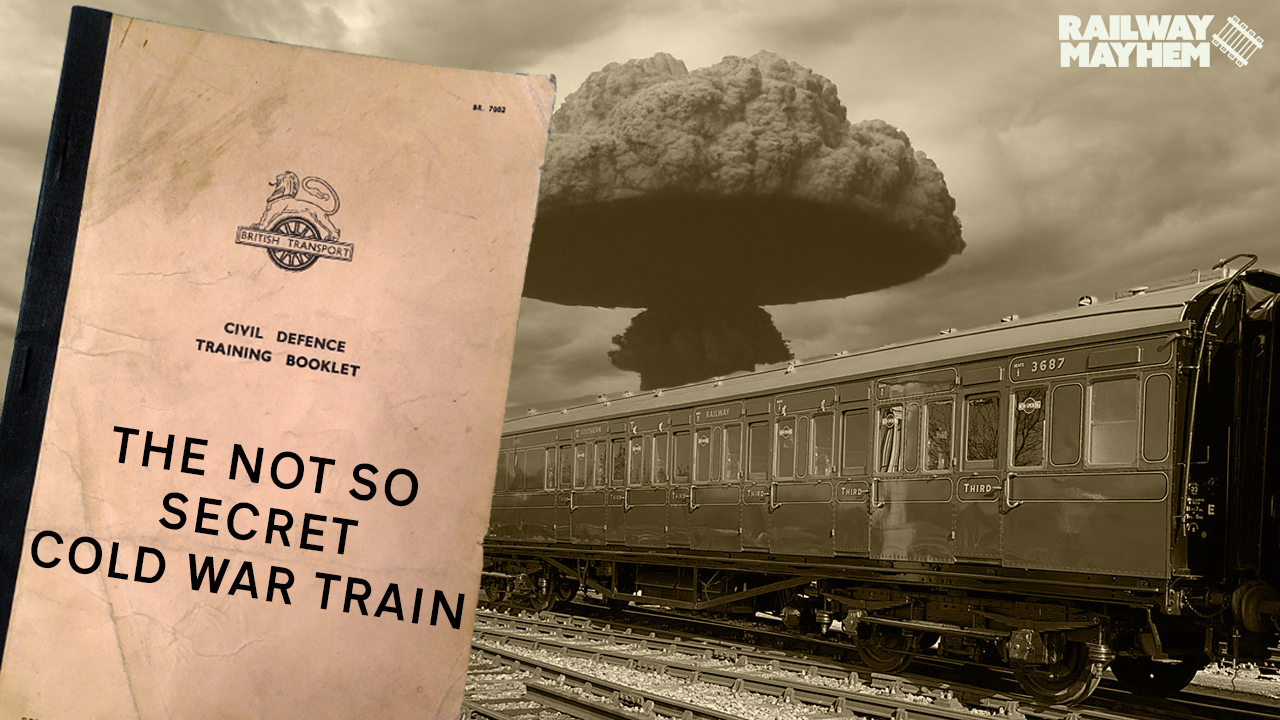

If you spent any time wandering around the UK’s railway network in the 1960s or 70s—perhaps spotting trains in the drizzle at Tunbridge Wells West—you might have seen a carriage poking out of a shed. It looked boring. It looked mundane. It looked like exactly the sort of thing you’d ignore while waiting for a steam engine.
Naturally, it was part of a secret government plan to keep the trains running after a nuclear war. Because if there’s one thing that can survive atomic annihilation, it’s British bureaucracy.
The Fast Facts
- The Plan: 12 "Mobile Control" Trains intended to run the UK after a nuclear strike.
- The Cost: Approx £40,000 per train (£750k today).
- The Tech: 1920s carriages fitted with 1960s phones and chemical toilets.
The "Emergency Control" Solution
In the 1950s, while the rest of the world was worrying about the existential dread of the Cold War, the British government was worrying about coal. Specifically, how to move it around a radioactive wasteland.

The solution? "Emergency Control Trains."
It took until the early 1960s for the Ministry of Transport to actually cough up the cash for this masterplan. And what a budget it was. Approximately £40,000 per train (about £750,000 in today’s money). For the price of a semi-detached house in the Home Counties, British Rail was tasked with saving the nation.
High-Tech, Low Budget
The plan called for twelve trains—two for each region. But don't go imagining sleek, lead-lined bunkers on wheels. These were unpowered "rakes" of four carriages, converted from whatever pre-nationalisation scrap was lying around.
The layout was standard issue "End of the World" chic:
- The Generator Car: Providing power, provided you didn’t run out of diesel. Which, in a post-nuclear scenario, was a bold assumption.
- The Stores and Mess Car: For tea, biscuits, and contemplating mortality.
- The Office Car: Because paperwork stops for no man, not even Oppenheimer.
- The Control and Apparatus Car: The brains of the operation.
This "Apparatus" car was stuffed with GPO-standard teleprinters and patch panels. The idea was to park the train in a nice quiet siding or tunnel, physically plug it into the telephone network, and run the country from a layby.
The Regional Jumble Sale
Since the directive was "make it happen" rather than "here is new equipment," the Regions did what they always did: they raided the scrap lines. The result was a rolling museum of the Big Four companies, all slapped in a coat of depressing dark grey paint with whiteed-out windows (to reflect the thermal flash of a nuke, obviously).

- Eastern & North Eastern Regions: Went for LNER Gresley "Teaks." Specifically, "Tourist Third Opens." Easy to strip, easy to fill with desks.
- Western Region: Converted GWR Restaurant Cars. A smart move, given they already had kitchens and water tanks. If the world is ending, one might as well have a proper galley.
- Southern Region: Being difficult as usual, they chose Maunsell "Restriction 0" stock. These "Hastings Gauge" coaches were narrow enough to fit through the tightest tunnels.
"The personnel were often regular British Railways civil engineers... who, in a national emergency, would leave their day jobs, report to their hidden stabling point, and deploy."
From Nuclear Winter to Heritage Summer
By 1980, the government realised that 1920s wooden carriages and 1960s analogue phones probably weren't going to cut it in a modern war. The fleet was withdrawn.
Ironically, the secret nature of these trains saved them. While other carriages were being run into the ground on commuter services, the Control Trains were sitting quietly in sheds, protected from the elements.

Many survived. Maunsell Brake 3rd No 3687, for instance, spent 20 years hiding in Tunbridge Wells before becoming a classroom for the London Fire Brigade and eventually retiring to the Bluebell Railway.
So, the next time you’re on a heritage line, eating an ice cream in a beautifully restored vintage carriage, just remember: that vehicle wasn't just built for holidays. It was built to run the railway through the ruins of the world.
Watch the Full Investigation
If you want to see exactly how British Rail planned to fight the apocalypse using teak coaches and tea urns, check out the full breakdown.
Enjoying the obscure?
If this is the sort of niche railway history that gets you up in the morning, make sure to subscribe.
Subscribe to RailwayMayhem
Hi, this is a comment.
To get started with moderating, editing, and deleting comments, please visit the Comments screen in the dashboard.
Commenter avatars come from Gravatar.